Queens Quinoa · Flour

Quinoa flour,
milled to 300 µm.

Queens Quinoa mills quinoa grown in Rajasthan into a fine flour. On our last tested lot, 100% passed a 300 µm sieve, with 14.63% protein and 5.18% dietary fibre.

Quinoa is a naturally gluten-free grain. Saponin on the same lot: 0.038%, against a 0.1% limit. Every dispatch carries its own lot COA.

For bakery • snacks and pasta • mixes • nutraceutical • pet food • skin and hair care • private label

14.63%Proteinlot tested Nov 2025
5.18%Dietary fibresame lot
300 µmParticle size100% passing
0.038%Saponinlimit 0.1%
01 · What it is

Whole quinoa, milled into flour.

Quinoa flour is quinoa grain milled into a fine powder. Quinoa is a pseudocereal, not wheat, barley or rye, and is naturally gluten-free.[1] We cold-mill our flour from quinoa grown in Rajasthan through our quinoa supply network.

The same grain gives our quinoa grain, our Quinoa Protein Concentrate and our quinoa starch. Buyers who need more than one quinoa ingredient deal with one supplier.

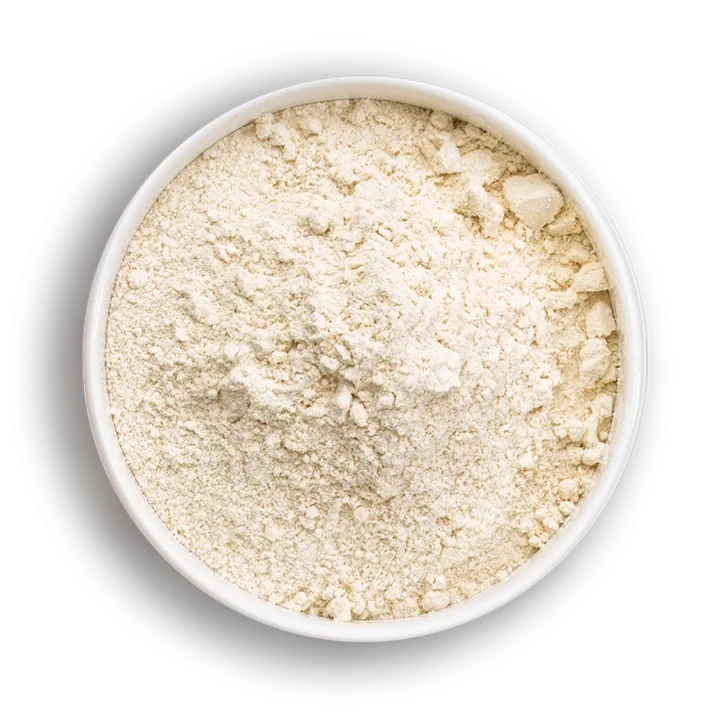
Queens Quinoa quinoa flour in a bowl
02 · Why Queens Quinoa flour

What you can check.

Flour is bought on a few numbers. These are ours, from our last tested lot.

✓

More protein than wheat or rice flour

14.63% protein on our last tested lot. Database values: wheat flour about 10.3% and white rice flour about 6.0%.[2][3]

✓

More fibre

5.18% total dietary fibre on the same lot, against about 2.7% for wheat flour and 2.4% for white rice flour.[2][3]

✓

Fine and even

100% of the lot passed a 300 µm sieve. A fine, even flour mixes into batters, doughs and powders without grit.

✓

Saponin, measured

0.038% saponin, against the 0.1% limit in India's quinoa standard.[9] Saponin is the bitter compound in quinoa's outer layer.

✓

Naturally gluten-free grain

Quinoa contains no gluten.[1] For a gluten-free label on your product, test the finished product: flours can pick up gluten where wheat is milled.[4]

✓

One supplier, grain to ingredient

First cultivation trials in India in 2013, in this crop since 2014. Grain, flour, flakes, protein and starch from one company.

Our values come from one lot COA. Database values for wheat and rice flour are averages and are listed under Research notes.

03 · Benefits by industry

Where it can help.

Food is the main use, not the only one. Food brands we have supplied include IndiGo, PVR, Haldiram's and Nature's Basket.

IndustryWhat to use it forWhy it may fit
Gluten-free bakeryBreads, cakes, cookies and muffinsNaturally gluten-free grain[1]; in research, a quinoa and rice flour bread had higher volume and a softer crumb than a rice flour bread[5]; quinoa flour has been studied at 40–60% of a gluten-free bread dough[7]
Wheat bakery and flatbreadsBreads, rotis, biscuits and crackers with added quinoaAdds protein and fibre; it partly replaces wheat flour, because quinoa has no gluten to build structure[6]
Snacks and extruded foodsChips, crackers, puffs and coatingsFine particle size for even mixing; 14.63% protein on our last lot
Pasta and noodlesQuinoa-blend pasta and noodlesUse with a binding flour or starch; start with a partial blend and test
Mixes and breakfastPancake, dosa, chilla and baking mixes; porridgeDry, fine flour (6.05% moisture on our last lot) for powder blends
NutraceuticalsHealth foods, protein blends and fortified formatsQuinoa contributes all nine essential amino acids; 5.18% dietary fibre on our last lot
Pet foodBiscuits, treats and kibbleA quinoa grain ingredient in flour form; lot COA with every dispatch
Skin and hair careFace masks, scrubs and powdersQuinoa seed is listed as a cosmetic ingredient for abrasive and skin-conditioning use[8]
Private label and importersPacked flour under your brand, or bulk for re-packingLot COA with every dispatch; documents confirmed per destination
04 · How it compares

Quinoa flour against wheat and rice.

Per 100 gQuinoa flour (our lot)Wheat flour, all-purposeWhite rice flour
Protein14.63 gAbout 10.3 g[3]About 6.0 g[2]
Fat3.87 gAbout 1.0 g[3]About 1.4 g[2]
Dietary fibre5.18 gAbout 2.7 g[3]About 2.4 g[2]
GlutenNone in the grain[1]Contains glutenNone in the grain[1]
Typical roleProtein and fibre in a blend; quinoa on the labelStructure in breads and bakeryNeutral base in gluten-free blends

Our values are from one lot at 6.05% moisture. Wheat and rice values are USDA database averages at typical moisture, so use the table as a guide, not a like-for-like test.

Quinoa flour may be the better choice when

  • You want more protein and fibre from the flour itself
  • The product is gluten-free and needs more than a starch base
  • Quinoa on the label matters to your buyer
  • The product can justify bench trials

Wheat or rice flour may be the better choice when

  • Bread structure from gluten is essential
  • Cost-in-use comes first
  • A neutral flavour and colour are required
  • You already have proven formulations

Most bakery uses start with a partial blend. Test volume, texture, colour and flavour in your own product before you scale up.

Test it in your own product.

A flour sample with the lot COA. Samples are available on request.

Request a sample ↗
05 · Key facts

Queens Quinoa flour at a glance.

ProductQuinoa flour (Chenopodium quinoa)
ProcessCold-milled from quinoa grain
SourceGrown in Rajasthan through our quinoa supply network
Protein14.63% (lot tested November 2025)
Dietary fibre5.18% (same lot)
Particle size100% passing 300 µm (same lot)
GlutenQuinoa is a naturally gluten-free grain; a gluten-free label needs a test of the finished product
Best before9 months
IndustriesFood, nutraceuticals, pet food, and skin and hair care
From the same grainQuinoa grain, quinoa flakes, Quinoa Protein Concentrate and quinoa starch
SamplesAvailable on request
Order termsPack size, minimum order, lead time and shipping terms agreed with each buyer
06 · Lot COA

Our last tested lot, in numbers.

Every dispatch carries its own lot COA. These are the results for our last tested lot.

ParameterResultLimit on the COA
Moisture6.05%—
Protein14.63%—
Crude fat3.87%—
Total dietary fibre5.18%—
Ash1.96%—
Acid insoluble ash0.0692%—
Alcoholic acidity0.12%0.18% max
Uric acid68 mg/kg100 mg/kg max
Saponin0.038%0.10% max
Particle size100% through 300 µm98% through 40 mesh

Results from a quinoa flour lot tested in November 2025. Every dispatch carries its own lot COA.

07 · The sample pack

What your team receives.

✓

Flour sample

Available on request, for bench trials in your product.

✓

Lot COA

For the sample lot, and with every dispatch after that.

✓

Packing details

Bulk bags; pack size agreed with the buyer. Private-label consumer packs are discussed separately.

✓

Export documents

Standard technical and export documentation; destination-specific requirements are confirmed before shipment.

08 · Questions buyers ask

Quinoa flour FAQs.

What is quinoa flour?

Quinoa flour is quinoa grain milled into a fine powder. Queens Quinoa cold-mills it from quinoa grown in Rajasthan through our quinoa supply network.

Is quinoa flour gluten-free?

Quinoa is a naturally gluten-free grain. A flour can pick up gluten where wheat is milled, so a gluten-free label on your product needs a test of the finished product. Ask us about testing for your lot.

How much protein does your quinoa flour contain?

Our last tested lot (November 2025) had 14.63% protein. Every dispatch carries its own lot COA.

How much fibre does it contain?

Our last tested lot had 5.18% total dietary fibre.

How fine is the flour?

On our last tested lot, 100% of the flour passed a 300 µm sieve. If you need a different particle size, tell us and we will confirm what we can supply.

Can quinoa flour replace wheat flour?

Partly. Quinoa has no gluten, so in bread it usually replaces part of the wheat flour rather than all of it. Start with a partial blend and test it in your product.

Can it be used in gluten-free bread?

Yes. In research, a bread made with quinoa and rice flour had higher volume and a softer crumb than a rice flour bread. Results depend on the formulation, so test it in your product.

How much saponin is in it?

0.038% on our last tested lot, against the 0.1% limit in India's quinoa standard.

What is the shelf life?

The best-before period on our COA is 9 months.

Can quinoa flour be used in pet food or personal care?

Yes. It is used in pet biscuits and treats, and quinoa seed is listed as a cosmetic ingredient in the EU for abrasive and skin-conditioning use, for example in face masks and scrubs.

What is the minimum order and lead time?

Pack size, minimum order, lead time and shipping terms are agreed with each buyer. Tell us your volume and destination and we will confirm.

Do you also supply quinoa grain?

Yes. We supply white and red quinoa grain, and make quinoa flakes, Quinoa Protein Concentrate and quinoa starch from the same grain.

Who supplies it?

Queens Quinoa Pvt Ltd of Udaipur, India. We ran our first quinoa cultivation trials in India in 2013 and have worked in this crop since 2014. Brands we have supplied include IndiGo, PVR, Haldiram's and Nature's Basket.
09 · Research notes

Sources behind the findings.

Published research, food databases and standards. Our own values come from the lot COA.

  1. [1] Coeliac UK. Grains: amaranth, buckwheat and quinoa are naturally gluten-free pseudocereals.
  2. [2] USDA FoodData Central. Rice flour, white, unenriched (FDC 169714).
  3. [3] USDA FoodData Central. Wheat flour, white, all-purpose, unenriched (FDC 169761).
  4. [4] Coeliac UK. Naturally gluten-free flours can be milled where wheat flour is milled.
  5. [5] Annals of the University Dunarea de Jos of Galati, Food Technology. Quinoa flour added to rice flour in gluten-free bread.
  6. [6] Study of wheat flatbread fortified with quinoa flour (PMC6420967).
  7. [7] Garg et al. (2026). Effects of quinoa flour addition on composite gluten-free bread. Sustainable Food Technology.
  8. [8] COSMILE Europe. Chenopodium Quinoa Seed: abrasive and skin-conditioning functions in cosmetics.
  9. [9] FSSAI (2017). Food Products Standards amendment adding quinoa, including the saponin limit.